Rural property searches at AlbertaTownandCountry.com
Great timing — this is one of the busiest real estate sites in Calgary right now. Buyers and sellers are moving quickly, so if a page feels in-demand, that's the point: you're where the action is.
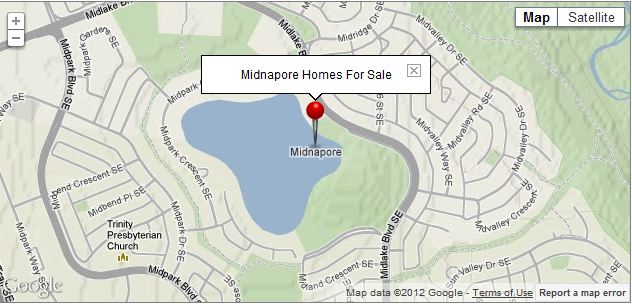
Midnapore is a community within the SE of the City of Calgary.
Midnapore was once an unincorporated community with its own train station, but as Calgary grew larger, it was annexed into being part of that city in 1961 and established as a neighbourhood in 1977. It is bounded to the north and east by Fish Creek Provincial Park, to the south by Sun Valley Boulevard and to the west by Macleod Trail.
In 2011 the neighbourhood had a population of 6,888. Residents in this community had a median household income of $68,492 in 2005, and there were 11% low income residents living in the neighborhood. As of 2006, 15.8% of the residents were immigrants. A proportion of 18.4% of the buildings were condominiums or apartments, and 29.3% of the housing was used for renting. Midnapore community info.
Midnapore Lake was developed by Keith Construction, which also developed several other lake communities in Calgary. The Midnapore Lake Residents Association (MLRA) is a not-for-profit association which owns, maintains and operates the facilities of the lake and park. Each residence is required to contribute to the assets of the MLRA each year to ensure the financial viability of the MLRA. More info.
Midsun The Mid-Sun Community Association strives to enhance the quality of life of the communities of Midnapore and Sundance in southeast Calgary by providing a voice, as well as direction, to meet the expressed needs of residents.
There were 8 Midnapore Single Family Homes Sold in August of 2012, with an average sale price of $582,675 and a median sale price of $341,500. The average days on market (DOM) for these 8 sales was 19 days.
Click or call,403.397.3706, to schedule your private viewing of any Homes for Sale in Midnapore .Or, to receive customized search of listings in Midnapore or South Calgary email me
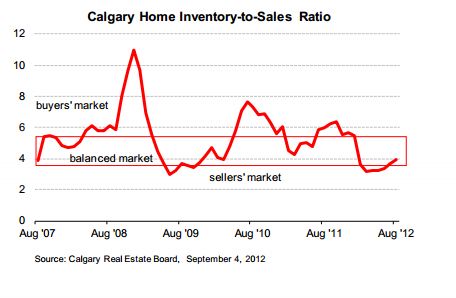
After a spring of defying the negative national housing market sentiment, the Calgary market cooled a bit in August. But, Alberta’s largest city remains one the nation’s most solid real estate markets. Back in February, the inventory-to-sales ratio in Calgary began to dip, as sales increased faster than new listings, indicating the market had quickly dipped into sellers’ territory. Buyers have since reversed that trend slightly, with the Calgary Real Estate Board reporting that monthly sales in August dipped 11.6 per cent month-over-month.The swing in housing market activity can be seen in average residential price changes. That average residential price nudged down to $417,000 in August, a 2.2 per cent drop from July, which is nonetheless 3.1 per cent higher than a year ago. The MLS also computes a benchmark price, which is less volatile. The benchmark price adjusts for specific features, such as lot size, bedrooms and location. The jump in the MLS benchmark price index through 2012 has been pretty impressive, up 6.5 per cent on a year-over-year basis. Activity in the single family detached home market has been particularly strong over the past year, with the MLS benchmark index jumping 7.8 per cent yearover-year in August. This is the main reason the overall residential home price index has increased so noticeably, as detached homes make up the vast majority of residential sales. For their part, condo and town home prices have been plodding along, with the benchmark price increasing 3.3 and 2.6 per cent, respectively, on an annual basis.
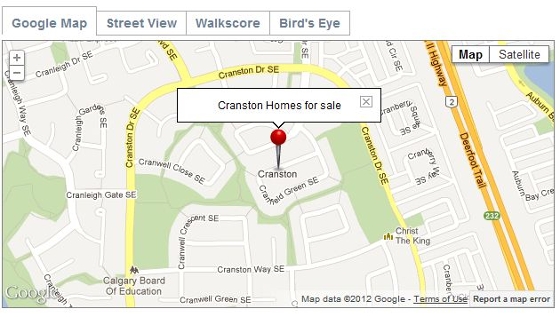
Nestled next to the stunning Bow River Valley and Fish Creek Park, Cranston is an inspiring backdrop for outdoor lifestyles. Hike, bike, rollerblade or jog along year-round pathways that unwind among acres of lush park space. Relax near the Bow River with a picnic or a fishing rod. Or spend time with the kids in one of the many parks and playgrounds.
Cranston Access.
Every area of the city is easily accessible from Cranston’s location at Highway 22X (Marquis of Lorne Trail). Deerfoot Trail takes you directly downtown or to the Calgary International Airport and puts Foothills Industrial Park within easy reach. Follow Highway 22X west for direct access to Kananaskis Country and the Rocky Mountains, as well as the retail business corridor on Macleod Trail. http://calgary.livebrookfield.ca/livebrookfield/index.php/communities/cranston/experience-the-community.
Century Hall (Cranston) is your very own private resident's facility complete with a gymnasium, banquet facilities, ice rink, splash park and toboggan run — plus the opening of Cranston Market and two new schools in 2010, Cranston has everything your family needs right in your own backyard.
Century Hall Is At The Heart Of The community Located on a spacious 7–acre gated park site is Century Hall – a striking 22,000 sq. ft. private facility for the residents of Cranston. Complete with meeting and banquet rooms, a gymnasium, multi-function rooms, a skate change area and more, Century Hall is the central gathering place for the community. Recreational programs, summer camps, workshops and community events all take place here.
Membership in the Cranston Residents Association is automatic and mandatory with the purchase of a home in Cranston. The payment of dues, which is reviewed and established annually, is secured by an Encumbrance (subject to upward adjustment for inflation) registered on the title of each member’s property. The Association, including the operation of Century Hall, is administered by a Board of Directors made up of Brookfield Residential and resident representatives.
Annual fees for 2012-13 are: Standard - $146.15 (including GST)
*Annual fees are subject to annual compounded inflation increases and GST. Interest will only be applied to all outstanding accounts beginning on May 1st of each year.
There were 33 Cranston Single Family Homes Sold in July of 2012, with an average sale price of $468,257 and a median sale price of $415,000. The average days on market (DOM) for these 33 sales was 60 days.
Calgary housing market among Canada’s most affordable: RBC Stronger home resales and new construction
BY MARIO TONEGUZZI, CALGARY HERALD AUGUST 27, 2012 http://www.calgaryherald.com/business/Calgary+housing+market+among+Canada+most+affordable/7149520/story.html http://www.rbc.com/economics/market/pdf/house.pdf
CALGARY — The Calgary-area housing market remains one of the most affordable in Canada, according to a report released today by RBC Economics Research.
The latest Housing Trends and Affordability Report said the local market has enjoyed the best of all worlds recently: stronger home resales and home building, moderately rising prices, and attractive and improving affordability.
“Such a combination is a rare feat, but it follows years of sluggish performance in the aftermath of the area’s mid-2000s boom,” said the report. “In the second quarter of 2012, a sharp drop in the costs of utilities provided unusual help to affordability in the area. Utilities and property taxes—two small components of home ownership costs—typically do not sway affordability, but the sudden reversal of earlier electricity rate increases led to a substantial 17 per cent quarterly decline in utilities, which was more than enough to move the affordability needle.”
In the second quarter, the RBC measures edged lower for condominium apartments and two-storey homes by 0.6 percentage points and 0.4 percentage points, respectively, while the measure for detached bungalows was unchanged in Calgary.
“Such general amelioration kept housing affordability in check at some of the better levels among Canada’s largest cities,” said the report.
The RBC Housing Affordability Measure, which has been compiled since 1985, shows the proportion of median pre-tax household income that would be required to service the cost of mortgage payments (principal and interest), property taxes, and utilities.
In the second quarter, RBC measures for Calgary edged lower for condominium apartments by 0.6 percentage points to 21.6 per cent and for two-storey homes by 0.4 percentage points to 37.2 per cent. The measure for detached bungalows remained unchanged at 36.7 per cent.
RBC said significant drops in the prices for electricity and natural gas in the second quarter of 2012 in Alberta “further solidified this province’s position as the market with the lowest home ownership costs as a share of household income in Canada.”
The RBC measures eased by 0.6 percentage points for both two-storey homes and condominium apartments, while the measure for detached bungalows edged lower by 0.3 percentage points, it said.
“Alberta experienced a 17 per cent decline in utility costs, which was the largest contributor to across-the-board improvements in housing affordability in the most recent quarter,” said Robert Hogue, senior economist, RBC. “Attractive affordability and a vibrant provincial economy are providing powerful incentives for Alberta homebuyers – second quarter home resales were at the best level in five years, surging 18 per cent over the same period last year.”
The affordablity measures in Alberta were: 32.0 per cent for detached bungalows; 34.8 per cent for two-storey homes; and 19.7 per cent for condominiums.
In Canada, they were: 43.4 per cent for bungalows, up 0.2 per cent; 49.4 per cent for two-storeys, up 0.6 per cent; and 28.8 per cent for condominiums, unchanged.
How the RBC Housing Affordability Measures work
The RBC Housing Affordability Measures show the proportion of median pre-tax household income that would be required to service the cost of mortgage payments (principal and interest), property taxes, and utilities on a detached bungalow, a standard twostorey home and a standard condo (excluding maintenance fees) at the going market prices. http://www.rbc.com/economics/market/pdf/house.pdf
Click or call,403.397.3706, to schedule your private viewing of any SE Calgary Homes for Sale.Or, to receive a customized search of listings in SE Calgaryemail me
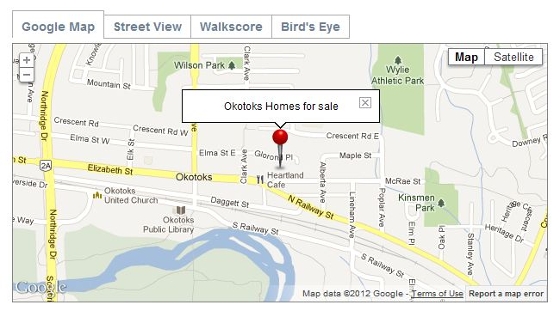
Okotoks is nestled in the Sheep River Valley of the Alberta Foothills, 20 kms south of Calgary on Highway 2/2A. Okotoks has centrally located access to a number of destinations, including downtown Calgary or the Calgary International Airport (40 minutes), Banff National Park (2 hours), Lethbridge (2 hours), Radium/Invermere (3 hours), and Waterton National Park (2.5 hours).
• Future South Calgary Hospital under construction - 10 minutes north.
Click or call,403.397.3706, to schedule your private viewing of any Okotoks Homes for Sale.Or, to receive a customized search of listings for Okotoks email me
It’s taking less time these days to sell a home in Calgary compared with last year.
According to the Calgary Real Estate Board, so far this month from August 1 to August 20, the average days on market to sell an MLS residential property in the city is 43. That’s a drop of 12.24 per cent from the same period a year ago when it took an average of 49 days to sell.
Each housing category has seen a decline in average days on market.
For single-family homes, it’s dropped by 12.77 per cent from 47 days to 41 this month.
The condo apartment category has seen a drop of 11.32 per cent to 47 days from 53 last year.
And the condo townhouse sector has seen a slight decline of 3.77 per cent from 53 days last year to 51 so far this month.
Whether you are a first time home buyer looking for the most up-to-date Calgary real estate listings or you are an empty nester looking to downsize, you have come to the right Calgary Real Estate Website.
Access properties that are listed on the Calgary Real Estate Board's MLS System. Listings are updated daily. 24 hours a day.
If you are looking for a house or condo in Calgary or a surrounding community register for free and I will send you a comprehensive search according to your criteria. Or, if you don't want to register go to our Home Finder and enter your wants and wishes for your new home there.
On my website you will find Calgary Housing Statistics and detailed listing photos, Google maps, community profiles and several tools that can help with your next home purchase.
I'm happy to answer any questions you may have about any property or Calgary Home for Sale. And, if you're thinking of selling I can provide a no-obligation evaluation and information you'll need to make an informed decision.
It’s not every day you get to be part of history in the making, but in a few weeks students and staff at four brand-new public schools will be doing just that.
Nose Creek School in Coventry Hills will soon open to 455 students in grades 4 to 8, allowing kids who previously had to be bused to Colonel Macleod school way down on 16th Avenue N.E. a chance to learn and play in their own neighbourhood.
“This has been a labour of love, and an opportunity that seldom comes along in a career,” says incoming principal Carol A. Hall, who comes to the new school from Colonel Macleod, so she won’t be a stranger to many of the kids.
“This is a wonderful opportunity to build something from the ground up.”
The school was constructed, like the other new schools built for the Calgary Board of Education this year, under a P3 (public-private partnership) initiative. Hall says all four schools use the same basic two-storey “batwing” design, with a core school connected to wings of modular classrooms, adding her school is set up to ultimately accommodate 800 students.
Although classes have yet to start, future Nose Creek students have already been involved in establishing new traditions, including picking the sports team name (Kodiaks). “The student voice will be a huge part of what we do here,” says Hall.
Hall says the school will incorporate up-to-date technology, such as smartboards, and the Learning Commons (formerly called the library) will feature innovations such as a Wall Talker — a whiteboard students can use to plan projects — and a 55-inch flat screen connected to a Mac Mini that will allow students to share projects from their iPads using AirServer.
Hall says the new schools have also partnered with Alberta College of Art + Design to base artists at the schools for several months.
Nose Creek is one of four new public schools opening this fall. The others — like Nose Creek, also middle schools in the north part of Calgary — are Captain Nichola Goddard School (grades 4-9) in Panorama Hills, Twelve Mile Coulee School (4-9) in Tuscany, and Ted Harrison School (5-9) in Taradale.
The only new school under construction is Robert Thirsk High School, a 10-12 in Arbour Lake set to open during the 2013-2014 school year. The CBE also has modernization projects underway at Western Canada and Lord Shaughnessy high schools.
Calgary ranked as fifth most liveable city in the world amid strong showing for Canada
Three Canadian cities have again cracked the top five on a ranking of the world’s most liveable places.
In the latest report from the Economist Intelligence Unit released Tuesday, Vancouver ranked third, followed by Toronto and Calgary in fourth and fifth respectively.
The Canadian cities were bested only by Vienna in second and Melbourne, which topped The Economist’s Liveability Ranking.
The annual survey of 140 cities uses more than 30 factors to gauge the state of healthcare, education, infrastructure, stability, culture and environment — rendering a score out of 100.
Top 10 cities
Melbourne, Australia — 97.5
Vienna, Austria — 97.4
Vancouver, B.C. — 97.3
Toronto, Ont. — 97.2
Calgary, Atla. — 96.6
Adelaide, Australia — 96.6
Sydney, Australia — 96.1
Helsinki, Finland — 96.0
Perth, Australia — 95.9
Auckland, N.Z. — 95.7
Vancouver lost marks only for petty crime rates, availability of quality housing and congested road networks, with report authors citing a series of infrastructure projects such as the new Evergreen transit line “that will no doubt have a long-term benefit, but in the short-term they can be disruptive.”
Toronto received a “Tolerable” rating (as opposed to Acceptable) for roads, public transit and housing while Calgary waned in temperature ratings.
Calgary Mayor Naheed Nenshi mused that his city’s spot on the ranking proves a “thriving business community, and a vibrant cultural scene that is attracting people from around the world” — echoing comments from Stephen Harper’s speech at the Stampede last month when the Prime Minister declared the Alberta metropolis as the greatest city in Canada.
The only other Canadian city to make the Economist list was Montreal in the 16th position.
Australia was the only country to outperform Canada, posting four cities in the top 10. The authors say the trend among the most liveable cities shows a preference for “mid-sized cities in wealthier countries with a relatively low population density.” Canada’s density is 3.40 people per square kilometre, while Australia’s is 2.88.
The results vary little from the last ranking released six months ago, with Vancouver maintaining the third spot after slipping from first place in 2011.
Most of the top-tier countries are separated by fractions of a percentage — the first-ranked Melbourne is scored 97.5, only 1.8 points higher than 10th-place Auckland, N.Z. The Economist Information Unit uses the ranking to provide suggestions on how businesses should compensate employees working abroad in cities “where living conditions are particularly difficult.”
It’s one of several studies of its kind, but economic development experts in the listed Canadian cities say The Economist report’s catering to business communities could lead to tangible benefits.
“It’s certainly circulated to an audience of potential investors and investors that may be interested in relocating to our city,” said Randy McLean, a strategy director at the City of Toronto, adding good scores in categories like education will help attract top management talent and their families.
“Certainly it’s encouraging,” he said.
National Post jedmiston@nationalpost.com Jake Edmiston | Aug 15, 2012 12:42 AM ET | Last Updated: Aug 15, 2012 12:06 PM ET
Calgary Rental Market Forecast Average rent to rise as vacancies move lower
Along with other areas in Calgary’s housing market, the purpose-built rental market has experienced an up-tick in demand. The apartment vacancy rate in October 2011 declined to 1.9 per cent from 3.6 per cent in October 2010. The apartment vacancy rate is forecast to average 1.7 per cent in October 2012, and decline to 1.5 per cent in 2013. With people taking advantage of the growing employment opportunities in the region, migration flows to Calgary will continue to be among the strongest contributors to rental demand. With vacancies declining, fewer incentives will be offered while rental rates are forecast to increase this year. The average two-bedroom rent is forecast to reach $1,150 per month in October 2012, up from $1,084 in October 2011. Pressure on rental rates will remain steady as people migrate to the region and no large net additions to supply are expected in the near term. Landlords and property owners may also see more demand from younger renters as youth employment has improved with Calgary’s expanding economy. As such, the upward pressure on rental rates is not expected to ease in 2013. In October 2013, the average two bedroom rent is forecast to rise to $1,200 per month, up $50 from a year earlier.The number of apartment rental units under construction, not including units for social housing, has increased from the previous year. There were 404 apartment rental units underway in March, up 41 per cent from 287 units a year earlier. Despite the increase, apartment rental starts have only contributed to a portion of the rental units under construction. Many of the apartment rental units underway were originally intended to be sold as condominium units. However, as market conditions changed, some property owners and developers decided to re-position their projects to take advantage of the growing demand in the rental market. The completion of the rental units under construction will likely not have a large impact on vacancy rates as an expanding population absorbs the new supply. Some older rental units are also anticipated to be converted into condominiums.
In its third quarter 2012 Housing Market Outlook, released Tuesday, the CMHC said the average MLS sale price in the Calgary census metropolitan area will jump from $402,851 in 2011 to $413,000 this year and then to $424,000 in 2013.
The report also said MLS sales in the Calgary CMA will increase from 22,466 in 2011 to 25,200 this year and 25,800 next year.
And housing starts in the region will rise from 9,292 in 2011 to 12,000 this year but fall back to 11,700 in 2013.
“The economy in Calgary has improved compared to the previous year and the trends that we have seen thus far are expected to continue in the months ahead,” said Richard Cho, senior market analyst in Calgary for the CMHC. “Job growth, relatively low mortgage rates and higher average earnings will all contribute to housing demand. Net migration will also be a key contributor and we have already seen some encouraging numbers at the provincial and city levels.
“Whenever we have an influx of people move to a region, naturally they are going to look for a place to live. Some will look to the rental market while others may choose to buy an existing home or build a new one. Housing demand this year will be supported by a number of different fronts.”
Cho said the resale market has moved into more balanced levels this year and that is supporting price growth.
“Supply in the existing home market has declined from the previous year while sales have increased,” he added.
In Alberta, economic growth and job creation are supporting housing demand, said the CMHC. By year-end, single-detached starts are projected to reach 17,600 units, up over 15 per cent from 2011. In 2013, single-detached starts will rise five per cent to 18,400 units.
“Existing homeowners will see the value of their property rise and this will help with move-up buying,” said the agency.
Multi-family starts will increase by 35 per cent in 2012 to 14,200 units. To reduce the risk of rising inventory in the next few years, developers will moderate multi-family starts in 2013 to 13,800 units, it said.
“In Alberta’s resale market, MLS sales will increase by 11 per cent to 59,800 units in 2012. In 2013, resale transactions in Alberta are forecast to increase to 61,000 units. MLS sales in Alberta will rise this year and next year, as employment and income growth provide the means to purchase,” said the report.
“With a transition to balanced market conditions unfolding, expect price growth to increase over the forecast period. The average resale price in Alberta is projected to rise by 2.5 per cent in 2012 to $362,200, and nearly three per cent to $372,300 in 2013. Both of Alberta’s largest markets, Calgary and Edmonton, have experienced improved market balance this year.”
Finding a property to rent in this city is becoming increasingly difficult as demand rises.
That's generating stiff competition among some renters in desperate search of a home.
“It's a bit of a lottery, there were plenty of people here,” said renter Nicolas Gonzalez.
In fact, 101 people viewed the one bedroom beltline apartment Gonzalez had his eye on. Fifty people filled out applications and, after two interviews and a stringent screening process, Gonzalez landed the suite — a gruelling process he's never been through before.
"Never. Usually it’s me and a roll of cash and ‘Oh, okay it’s yours,’ 'here's the cash,' ‘thanks,’ done, keys."
Gonzalez says he's not sure what gave him the edge.
Darren Paddock, the co-owner of RentFaster.ca, advises renters to find ways to help them stand out from their competitors because properties are going fast.
"These people are getting a number of applicants in two to three days time," says Paddock.
"It’s really hot, we've never seen it like this before."
Paddock says an influx of workers and tighter mortgage rules are to blame.
And the Canada Mortgage and Housing Corporation predicts the current 1.9 vacancy rate will drop to 1.5 by next year.
Calgary real estate market stays the course Sales activity trending towards long-term stability
Calgary, July 3, 2012 Residential sales in the City of Calgary totaled 11,752 for the first half of this year, a 16-per-cent increase over the same period last year. The rise in sales has brought activity levels closer to long-term trends in the city.
Recent mortgage rule changes may dampen some of the gains in the resale market, says Ann-Marie Lurie, CREB®s chief economist. But this is not expected to cause a full reversal of either sales or price growth, provided the global economic situation does not significantly worsen.
Our housing market is returning to normal levels of activity, supported by the improvements in our employment sector and rise in migration.
Single family monthly sales reached 1,609 units in June, a decline over the previous month, but 16 per cent higher than levels recorded in June 2011. However, new listings are declining as consumers appear to delay putting units on the market until they see further price recovery. Despite the decline, with a current inventory of 3,817, the supply constraint has eased and the single family market is moving towards more balanced levels.
Overall, the Calgary market is trending towards long-term stability, says Bob Jablonski, president of CREB®. Activity levels are consistent with our expectations, and are not demonstrating an overheated market. Weve seen a slight lack of supply in single-family homes, but this is not the case in the broader residential market, including surrounding towns.
The single-family benchmark price for the month of June 2012 was $430,800, a 7.3-per-cent increase over the previous year. Year-over-year price increases have been particularly strong in the recent months, in part due to the decline in months of supply. As the city moves towards balance, we can expect price growth to ease in following months.
Homebuyers are confident about the long-term prospects in our city, and continue to search for homes in those communities that align with their needs, Jablonski says. People who are in the market to buy right now have to make their decisions quicker, but they are well informed and they continue to seek out value for their money.
While June sales activity showed a modest improvement over last year, year-to-date condominium apartment sales totaled 1,858, a 7-per-cent increase over the first half of 2011. Both monthly and year-to-date sales remain consistent with long-term trends. The rise in sales over the first half of the year combined with a decline in listings helped reduce the excess supply. With supply hovering just above three months, the condominium apartment market remains in balance.
The condominium-apartment market recorded a modest improvement in pricing, with a benchmark price of $246,300 in June 2012, a year-over-year price gain of 1.5 per cent. The condominium-townhome benchmark price grew by 3.3 per cent over 2011, and is now $278,000.
Recent reports have mentioned an overvalued Canadian housing market, and it is important to note that the Calgary market has already recorded a correction, says Lurie, who notes benchmark prices in the entire CREB® residential market remain 8 per cent below peak levels. Alberta was slow to recover from the recession, but this year our province is expected to lead the country in economic growth. This growth will continue to support gains in full-time employment and encourage positive momentum in our local housing market by way of both demand and price recovery, Lurie concludes.
OKOTOKS — Already feeling the strain on their collective waistband, more than three-quarters of Okotoks residents believe further growth of the town is inevitable despite a cap on growth, a new Ipsos Reid survey reveals.
The survey results offer insight to town councillors as they prepare to make a decision in the more than decade-long debate over how to manage development in the bedroom community just south of Calgary.
“Nobody is really denying that growth is going to happen,” Jamie Duncan, vice-president of Ipsos Reid, told the Herald on Monday. “What they’re looking for is clear direction on how it’s going to happen and what role the town is actually going to take in terms of managing that.”
Over the past five years, Okotoks has seen growth of 42.9 per cent, from a population of 17,150 in 2006 to 24,511 last year, according to 2011 census data.
In 1998 the town placed a 30,000 cap on its population. The Sheep River, the community’s water source, can only serve a maximum of 32,000.
On Sept. 24, town council will vote on whether to keep the cap or lift it and instead bid to annex enough land outside the town’s existing boundary to accommodate growth for the next 30 years. Lifting the cap will require the town to explore outside water options, including connecting to a regional water pipeline from Calgary.
The vote, originally planned for June 25, was postponed to allow councillors more time to consider their decision.
In late April the town commissioned the Ipsos survey, in paper and online, the results of which were discussed during Monday’s council meeting.
Of the survey respondents, 74 per cent are concerned about population growth. Of those, 33 per cent are “very concerned” and 41 per cent are “somewhat concerned” about growth.
Eighty-five per cent of survey respondents are concerned about the town’s water supply.
Driving many residents’ trepidation are concerns that Okotoks will lose its “small town feel,” a sentiment shared by resident Mary Ellen Goslin, who said she doesn’t want to see the population cap lifted.
“I like the small town atmosphere,” said Goslin, who has lived in Okotoks for six years. “You get to know people. . . . That’s why I live here, and not in Calgary.”
Of the survey respondents, 86 per cent say it’s important the town maintain its close-knit community atmosphere, including Monika McLachlan, owner of the Okotoks Candy Shoppe.
McLachlan said the small town appeal is what draws customers to her store.
“It’s a destination place, not just a bedroom community for Calgary,” she said.
Rather than have respondents choose future growth options, the survey gauged residents’ feelings about the quality of life, rate of growth, concerns about growth and confidence in town council to make the right decision.
“It certainly wasn’t a plebiscite question,” said Coun. Matt Rockley, who put forth the motion in March for the town to vote on the issue. “It wasn’t intended that this survey will make the decision for us. It was intended that we would receive information to help us determine . . . the best way forward.”
Sixty-six per cent of respondents are confident town councillors will make the best decision for the community.
“To me, that’s a great indication that people feel that council will make the right decision,” said Rockley. “They aren’t looking for a plebiscite to decide this issue.
Coun. Florence Christophers said council now needs to digest the survey results and decide on the best course of action.
“We have three months to get our game on,” Christophers said. “It’s our job. It’s our responsibility.”
Mayor Bill Robertson agreed. Debate on the population cap has been ongoing for years, and the vote has been postponed numerous times.
“I would be very disappointed if we didn’t make a decision on Sept. 24,” he told council.
Finance Minister Jim Flaherty has outlined new rules aimed at reining in a hot housing market and ensuring Canadians aren't taking on more debt than they can afford.
Flaherty laid out a series of changes to the rules that govern the Canada Mortgage and Housing Corporation, the Crown corporation that effectively oversees the housing market by insuring the vast majority of Canadian mortgages.
The most important new change is that the maximum amortization period has been reduced to 25 years, down from 30. The longer a mortgage is spread out, the lower the monthly mortgage payments are — but the more the borrower ends up paying overall over time.
The impact of the change is likely to be significant. It's about the same as a 0.9 percentage point increase on a typical mortgage, Bank of Montreal economist Robert Kavcic noted.
Indeed, the numbers add up. A $300,000 mortgage spread over 30 years at 4.0 per cent would cost $1,426 a month to pay back. That same mortgage amortized over only 25 years increases the monthly payment by $152 or 10 per cent to $1,578 a month.
Ultimately though, the higher monthly payment saves the borrower money in the long run. The total interest payments are $213,558.91 on the 30-year mortgage, but only $173,416.20 on the 25-year one.
The shortened amortization is also likely to affect a huge segment of the market, as about 40 per cent of all new mortgages were amortized over 30 years last year, the Canadian Association of Accredited Mortgage Professionals estimates.
Anyone who needed or wanted a 30-year mortgage before is going to have to qualify under tougher 25-year requirements now.
Ottawa has now moved three times to rein in the maximum mortgage term, since the CMHC briefly started insuring mortgages with 40-year terms in 2006. The limit was brought down to 35 years, then 30 and now the more traditional 25.
"The reductions to the maximum amortization period since 2008 would save a typical Canadian family with a $350,000 mortgage about $150,000 in borrowing costs over the life of that mortgage," Flaherty said.
"Our government has encouraged Canadians to borrow responsibly," Flaherty said. "Most Canadians have done so."
At 25 years, the maximum amortization period for CMHC-backed loans is now back to where it had historically been before the Harper government began raising the period after taking office in 2006.
Interim Liberal Leader Bob Rae made that very point in question period on Thursday, asking Prime Minister Stephen Harper if raising CMHC's limit to 40 years in the first place was a mistake.
"The government has altered rules a number of times and will continue to do so on a prudent and flexible manner depending on the circumstances," the prime minister replied.
Flaherty also outlined a few other measures Thursday.
The government has lowered the total amount that Canadians can withdraw when refinancing their homes to 80 per cent of the home's value, from 85 per cent.
"This will promote saving through home ownership and encourage homeowners to prudently manage borrowings against their homes," Flaherty said.
Flaherty also moved to cap the maximum gross debt service ratio at 39 per cent and the maximum total debt service ratio at 44 per cent in order to get CMHC insurance. Banks calculate the former by adding up mortgage payments and property taxes on a home loan, and dividing by the borrower's income. The latter adds in other debt payments such as lines of credit and credit cards to the top side of the ledger.
Although they both have obscure, technical names, they're both effectively just limits on how much debt a borrower is allowed to take on as a percentage of their overall income. That move, too, is aimed at making sure borrowers can't bite off more than they can chew.
The final change was to limit CMHC insurance to homes priced under $1 million. "Wealthy people can borrow whatever they want from banks, and they can work that out from banks," Flaherty said. "That is not my concern."
That effectively means that a homebuyer who wants to purchase a home for more than $1 million can't get insurance on it — which in turn means the buyer will have to come up with the 20 per cent down payment requirement in order to get an uninsured mortgage.
So under any circumstance, any new borrower wanting to buy a home of $1 million or more is going to have to put $200,000 down at a minimum. That's also likely to have a major impact on a comparatively small segment of the market.
"Although this could create some market dislocations in the just-under-$1-million segment, it's consistent with CMHC's recent efforts to focus its insurance business on encouraging owner-occupied purchases among average Canadians," BMO economist Michael Gregory noted.
All of the changes will be in effect as of July 9, 2012. In the interim, the action in hot Canadian housing markets is likely to get even hotter, experts say, as borrowers scramble to get in ahead of the more stringent rules.
"As we’ve observed around prior mortgage rule changes, some housing market activity will likely be pulled forward ahead of the implementation date," Kavcic noted.
But there's likely to be a subsequent pullback, too, he says. The last time Ottawa tinkered with CMHC rules, home sales fell by three per cent in the two months following the implementation date.
The Canadian Real Estate Association reacted coolly to the news on Thursday, calling it a "measured response" to rein in debt loads, but taking pains to note that the home resale market contributes $20 billion a year to Canada's economy and as such, is deserving of caution.
"Going forward, we would urge the government to consider the impact of further interventions in the market carefully," CREA said.
Calgary, June 1, 2012May 2012 residential sales in the City of Calgary increased by 31.8 per cent over last year, to 2,385, making it the highest May activity since the recession.
In the past month, easing concerns regarding Calgarys long- term economic prospects combined with continued full-time job growth and low interest rates, has contributed to the rise in housing demand, pushing sales to levels more consistent with long term trends, says Ann-Marie Lurie, CREB®s chief economist. However, we are not out of the woods in terms or economic risks, as recent indicators point towards weak growth in the U.S. economy and increased uncertainty in global markets.
Demand growth continues to outpace supply in the single-family market. Monthly sales reached 1,710 units in May, resulting in year-to-date sales 19.1 per cent higher than the same period last year. While new listings recorded a year-over-year increase of 6.7 per cent, this did little to alleviate the supply constraint in the single-family market. Inventories totaled 3,842 in May, keeping months of supply in seller territory, with less than 2.5 months of supply.
With less supply in the single-family market, buyers are making their decisions quicker, says Becky Walters, CREB®s president-elect. As a result, weve seen a reduction in the amount of time homes stay on the market, and sellers are getting figures closer to their list price.
The single-family benchmark price for the month of May 2012 was $427,500, a 6.7-per-cent increase over the previous year. Prices were expected to record modest gains this year and, while the increase is higher than expected, the single-family benchmark price remains 5.3-per-cent below the peak price of $451,400, reached in July 2007.
Buyers are also turning to surrounding areas and the condominium markets, both of which have adequate supply levels and price growth that remain below single-family levels, Walters says.
After the first five months of the year, condominium-apartment sales totaled 1,518, an 8.7-per-cent increase over the same period last year. New listings for the month rose by 5.4 per cent compared to last year, but on a year-to-date basis, they remain at comparable levels. As the number of sales outpaced new listings, total inventory levels of apartment condominiums have retracted by 3 per cent over May 2011, and with three months of supply, firmly moved into balanced territory.
The condominium-apartment market recorded a modest improvement in pricing, with a benchmark price of $245,400 in May 2012, a year-over-year price gain of one per cent. Meanwhile, condominium-townhome benchmark prices appreciated by 3 per cent over last year for a monthly price of $277,000.
While there have been some conflicting opinions on the national housing market, particularly with price expectations, the Calgary housing market does not appear to reflect either a boom or a bust scenario, and is simply returning to activity levels consistent with a normal market, says Lurie. The current low supply in the single-family market has pushed up pricing slightly higher than anticipated. However, sufficient supply in the remaining housing industry combined with economic uncertainty will likely prevent a repeat of the price jumps recorded in the not-so-distant past.
About CREB®
CREB® is a professional body of more than 5,100 licensed brokers and registered associates, representing 238 member offices. CREB® is dedicated to enhancing the value, integrity and expertise of its REALTOR® members. Our REALTORS® are committed to a high standard of professional conduct, ongoing education, and a strict Code of Ethics and standards of business practice.
For Calgary Metro, CREB® statistics include only Zone A, B, C and D for properties located in Calgary. Furthermore, all historical data has been adjusted to the most current information.
Any use or reference to CREB® data and statistics must acknowledge CREB® as the source. The board does not generate statistics or analysis of any individual member or companys market share.
Average price information can be useful in establishing trends over time, but does not indicate actual prices in centres comprised of widely divergent neighbourhoods, or account for price differentials between geographical areas. All MLS® active listings for Calgary and area may be found on the boards website at www.creb.com.
CREB® is a registered trademark of the Calgary Real Estate Board Cooperative. The trademarks MLS® and Multiple Listing Service® are owned by the Canadian Real Estate Association (CREA) and identify the quality of services provided by real estate professionals who are members of CREA. The trademarks REALTOR® and REALTORS® are controlled by CREA and identify real estate professionals who are members of CREA, and subsequently the Alberta Real Estate Association and CREB®, used under licence.
Calgary leads country in year-over-year MLS sales growth
Increase of 30.3%
CALGARY — Calgary led the country in April with the highest year-over-year growth in MLS sales, according to the Canadian Real Estate Association.
In a report released Tuesday of housing market activity in Canada’s major centres, CREA said MLS sales of 2,720 in Calgary were up 30.3 per cent from a year ago.
In Canada, sales of 49,480 for the month increased by 11.5 per cent from April 2011.
The average MLS sale price in Calgary rose by 0.7 per cent to $414,932 while it was up 0.9 per cent in Canada to $375,810.
“Calgary is quietly becoming a market to watch,” said Robert Kavcic, economist with BMO Capital Markets, adding sales are back above the 10-year average for the first time in about three years.
“Prices have yet to gain much momentum but supply conditions are tightening rapidly across Alberta. The months’ supply was down to 4.6 from a post-recession high of more than eight, and sales have far outpaced new listings in recent months. If oil prices remain high enough to continue supporting strong economic growth and migration flows, Calgary could again become Canada’s real estate hot spot in short order.”
Robert Hogue, senior economist with RBC Economics, said April was the third consecutive “outsized” increase in Calgary which is a “clear indication that this market is finally taking flight.”
New listings in Calgary of 4,370 increased by 4.4 per cent from last year. Throughout Canada, new listings rose by 4.9 per cent to 89,739.
In Alberta, sales rose by 23.5 per cent to 6,191, new listings increased by 2.4 per cent to 10,718 units and the average sale price was up 1.9 per cent to $365,830.
“A number of Canadian housing market trends in April remained intact from the previous month,” said Wayne Moen, president of CREA. “Trends in Vancouver and Toronto continue to diverge. These two housing markets have an obvious influence on national statistics . . .”
In Toronto, sales of 10,350 in April were up 14.5 per cent from last year and the average sale price rose by 8.4 per cent to $517,556. But in Vancouver sales fell by 13.2 per cent to 2,837 and the average price dropped by 9.8 per cent to $735,315.
“It bears repeating that the national average price was skewed higher last spring by record level high-end home sales in Vancouver’s priciest neighbourhoods, and that a replay of this phenomenon was not expected this year,” said Gregory Klump, chief economist of CREA. “Sales data confirm that high-end activity in Vancouver is well off the peak levels reached at this time last year, which is exerting a gravitational pull on the national average price.
“By contrast, activity in Toronto is stronger this spring than it was last spring. Higher-priced sales activity there is on the rise and buoying average prices. As the most active housing market in Canada, Toronto is the biggest factor supporting national average price.
“Netting Vancouver out of the national average price calculation yields a 4.9 per cent year-on-year gain. Netting Toronto out of the national average price calculation, while leaving Vancouver in, produces a 2.2 per cent year-on-year decline. Netting out both Vancouver and Toronto results in a 3.1 per cent increase in average price. On balance, this points to modest price growth amid balanced market conditions in much of the rest of Canada.”
Diana Petramala, economist with TD Economics, said absent of an external negative economic shock, Canadian housing demand should remain supported by a continued low interest rate environment through 2012.
“Still, growth in home prices and sales will likely be limited as the overvaluation has led to a deterioration in affordability,” said Petramala. “Overall, we anticipate the Canadian housing market to remain relatively flat in the coming year with home prices to rise just another two per cent this year, following gains of seven per cent in each of the last two years.”
''Activity was either up or held steady in half of all local markets in April, with Toronto and Calgary posting the biggest monthly increases for the second month in a row. Activity gains in Montreal, Winnipeg, Edmonton, as well as London and St. Thomas also made significant contributions to the national sales increase in April. Increased activity in these markets offset monthly declines in Ottawa, Windsor-Essex, Quebec City, the Fraser Valley, and Vancouver.'' Quote from crea.ca article May 15-2012
New home construction and resale homes see increased activity
BY MARIO TONEGUZZI, CALGARY HERALD MAY 11, 2012
CALGARY — The City of Airdrie, just north of Calgary, is experiencing a housing market boom these days.
From new home construction to resales, activity has taken an upward swing this year.
“The housing market in Airdrie is hot,” said Curt Woodhall, vice-president of sales and marketing for Vesta Properties, the developer and builder of the new Williamstown project in northwest Airdrie. “Vesta builds in a number of communities in Alberta and British Columbia and the Airdrie market in particular is very robust.”
Year-to-date, there have been 107 housing starts in Williamstown. Sales so far this year have included 60 for about $17 million with the average selling price of about $310,000.
The development on 66 hectares will have a total of 1,013 homes — 600 multi-family and 413 single-family — and over 60 per cent have already been sold.
“Vesta Properties is experiencing tremendous success in Williamstown in Airdrie,” said Woodhall, adding there will be 12 show home openings at the project’s grand opening celebration Saturday. “With low interest rates and good value for your dollar, we are seeing demand on every housing type from starter condominiums to luxury homes.”
According to the 2011 census, Airdrie’s population was 43,155, up 8.37 per cent from the year before. In the past decade, the population has more than doubled. In 2001, it was 20,382.
Kent Rupert, Airdrie’s economic development team leader, said the building permit numbers for Airdrie are good this year.
“I say that every year but it just seems like we keep growing and growing. We had a bit of a blip in 2009 and 2010 but last year we did over 1,000 doors. That’s houses, duplex, multi-family. This year we’re ahead of where we were last year.”
Commercial and industrial development in the north part of Calgary is a factor.
“The good news is yes we’re seeing lots of new development but with it being in Rocky View and Airdrie where are the people going to live ... Our residential is growing,” said Rupert.
He said about 40 to 50 per cent of people living in Airdrie work outside the community.
“It really depends on people’s lifestyles but certainly when we were a lot smaller 19,000-20,000 people came out here for that small town and everything else. Now we’re growing up into a young, dynamic city and there’s lots of excitement going on with new restaurants, new retail and big, larger industrial projects. There’s a real excitement throughout the city,” said Rupert.
Year-to-date until the end of March, residential building permits of 342 are up from 268 in 2011, 191 in 2010 and 81 in 2009.
A similar boom is taking place in the resale housing market.
“Sales activity in Airdrie soared in the first quarter of 2012, with a 44-per-cent increase over the previous year, marking the best quarter (one) sales performance since 2007,” said the Calgary Real Estate Board in a report.
“The significant rise in sales, combined with lower listings, pushed the market into balanced conditions.”
CREB said the MLS Home Price Index for single-family homes was up three per cent over the previous year with the benchmark price at $354,933 in the first quarter.
It said the single-family benchmark price in Airdrie was $354,300 in March, a two per cent increase over the previous year and roughly $79,000 less than the single-family price in Calgary.
Calgary, April 2, 2012 City of Calgary residential sales continued to rise in March 2012, reaching 2,167 units, an increase of 12.6 per cent over last March.
The rise in activity is related to the continued improvement of our economy and consumer confidence, as some concerns regarding the global economy have eased, says Ann-Marie Lurie, CREB® chief economist.
After the first quarter of 2012, sales are up by 7.3 per cent over the same time last year. While the increase is significant, when compared to historic activity, residential sales continue to remain below the long-term trend. Monthly new listings remain slightly lower than last year, whereas year-to-date figures show 7.2 per cent fewer listings have come onto the market in the first quarter of this year.
While the number of listings for the first quarter of 2012 remains low compared to last year, the level of decline has lessened, says Bob Jablonski, president of CREB®; therefore pointing to the fact that those people who have been on the fence are starting to list their homes, and this trend is expected to continue.
The year-over-year decline in new listings, combined with improving sales, has pushed down inventory levels to 5,092 units from 5,866 last year, as well as months of supply. However, as Jablonski notes, it is not uncommon for the months of supply to decline in March as we transition from the winter season to the spring season.
Recently, the tightening supply has brought about much discussion of multiple offers on houses. It is important to note that multiple offers can happen during any market with a well priced listing or a unique property, says Jablonski. New listings coming onto the market at a good price are generating a lot of activity, but year-over-year index price growth for the typical home in Calgary in March was 2.9 per cent, which is considered a normal range. Also, the sales-price to list-price ratio does not reflect levels recorded during the peak of the market, when there were supply shortages, Jablonski adds.
Single family homes continue to record strong activity, with sales increasing by 10.3 per cent at the end of the first quarter.Meanwhile, quarter totals for listings of single-family homes remain 8.3 per cent lower, resulting in a tightening of supply. The benchmark price reached $433,500, while the MLS® Home Price Index points towards a price growth of 3.6 per cent compared to last year.
The apartment condominium market continues to exhibit lower sales, with 782 sales recorded in the first quarter of 2012, a decline of 2.1 per cent compared to last year. However, March sales activity did post a 7.2 per cent gain over last year and is closer in line with typical March sales in this sector. New listings recorded a year-over-year improvement of 9.1 per cent for the month of March, but still remain 2.3 per cent lower than last year at the end of the first quarter. Despite the monthly rise in new listings, inventories continue to decline. Overall market conditions continue to favour the buyer.
The condominium apartment and townhouse benchmark price for the month of March was $247,800 and $293,600, respectively. While the apartment index price has remained relatively stable compared to last year, the condominium townhouse index recorded a modest improvement of 1.96 per cent over last year.
The single family market continues to lead the housing growth in both sales activity and pricing, and the condominium market appears to have turned the corner as well, Jablonski concludes. Overall, the Calgary real estate market continues to move in the right direction, with all indicators pointing towards stable growth and a move towards typical levels of activity.
About CREB®
CREB® is a professional body of more than 5,100 licensed brokers and registered associates, representing 243 member offices. CREB® is dedicated to enhancing the value, integrity and expertise of its REALTOR® members. Our REALTORS® are committed to a high standard of professional conduct, ongoing education, and a strict Code of Ethics and standards of business practice.
For Calgary Metro, CREB® statistics include only Zone A, B, C and D for properties located in Calgary. Furthermore, all historical data has been adjusted to the most current information.
Any use or reference to CREB® data and statistics must acknowledge CREB® as the source. The board does not generate statistics or analysis of any individual member or companys market share.
Average price information can be useful in establishing trends over time, but does not indicate actual prices in centres comprised of widely divergent neighbourhoods, or account for price differentials between geographical areas. All MLS® active listings for Calgary and area may be found on the boards website at www.creb.com.
CREB® is a registered trademark of the Calgary Real Estate Board Cooperative. The trademarks MLS® and Multiple Listing Service® are owned by the Canadian Real Estate Association (CREA) and identify the quality of services provided by real estate professionals who are members of CREA. The trademarks REALTOR® and REALTORS® are controlled by CREA and identify real estate professionals who are members of CREA, and subsequently the Alberta Real Estate Association and CREB®, used under licence.
Data is supplied by Pillar 9™ MLS® System. Pillar 9™ is the owner of the copyright in its MLS®System. Data is deemed reliable but is not guaranteed accurate by Pillar 9™.
The trademarks MLS®, Multiple Listing Service® and the associated logos are owned by The Canadian Real Estate Association (CREA) and identify the quality of services provided by real estate professionals who are members of CREA. Used under license.



 Diane Richardson 403.397.3706